
AI Chips Continue to Drive the Semiconductor Industry in 2026
Artificial intelligence is changing the semiconductor industry at a remarkable pace. From powerful GPUs and high-bandwidth memory to advanced chip manufacturing, the growing demand for AI computing is creating new opportunities for chipmakers while putting pressure on global supply chains.
Artificial intelligence has quickly become one of the biggest forces shaping the technology industry. Behind every AI chatbot, image generator, automated assistant, and advanced computing platform is a collection of semiconductor chips responsible for processing enormous amounts of information.
As AI technology becomes more sophisticated, the hardware required to support it is becoming increasingly important. Technology companies are investing billions of dollars in data centres, specialised processors, memory systems, and advanced manufacturing facilities to keep up with demand.
This growing investment is having a significant impact on the semiconductor industry in 2026. Companies that design AI processors are competing to deliver faster and more efficient hardware, while manufacturers are working to increase production capacity and overcome technical challenges.
The effects extend beyond artificial intelligence. The same supply chains that produce chips for AI infrastructure also support computers, smartphones, gaming hardware, automobiles, and other connected devices.
So, what exactly is driving the AI chip boom, and what does it mean for the future of technology?
Let’s take a closer look.
- IDC semiconductor market forecast — Semiconductor market outlook for 2026.
- Reuters report on GlobalFoundries and TSMC — The $2 billion silicon interposer agreement announced in October 2026.
- TrendForce advanced packaging analysis — Research on advanced packaging technologies for AI chips.
- NVIDIA’s official technology news — Company announcements about AI processors and computing infrastructure.
What Are AI Chips, and Why Are They Important?
AI chips are specialised processors designed to handle the calculations needed to train and run artificial intelligence models.
Traditional computer processors, known as central processing units (CPUs), are built to handle a wide range of tasks. They remain essential for operating systems, everyday applications, and general computing.
AI workloads, however, often require thousands of calculations to be performed simultaneously. This is where graphics processing units (GPUs) and other specialised AI accelerators become particularly useful.
GPUs were originally developed to render graphics for video games and professional visual applications. Their ability to perform many calculations in parallel has also made them valuable for machine learning and other demanding AI workloads.
Today, several types of chips contribute to AI computing:
- Graphics processing units (GPUs): Powerful processors used to train AI models and run demanding AI applications.
- Application-specific integrated circuits (ASICs): Chips designed for particular tasks, including specialised AI workloads.
- Central processing units (CPUs): General-purpose processors that coordinate computing tasks and handle many operations surrounding AI workloads.
- High-bandwidth memory (HBM): Advanced memory technology that supplies processors with data at very high speeds.
- Networking and data-processing chips: Components that help large groups of processors communicate and move information efficiently.
These components work together to make modern AI systems possible.
A powerful processor alone is not enough. It also needs sufficient memory, fast connections to other components, reliable power delivery, and an efficient cooling system.
That combination is becoming increasingly important as companies build larger AI systems capable of handling more demanding workloads.
AI Chip Demand Is Reshaping the Semiconductor Market
One of the clearest signs of AI’s influence is the amount of money flowing into semiconductor manufacturing and computing infrastructure.
According to an April 2026 forecast from market research firm IDC, worldwide semiconductor revenue could reach approximately $1.29 trillion in 2026, representing projected annual growth of 52.8%.
IDC identified AI infrastructure as a major driver of this expected expansion, with high-bandwidth memory and other advanced memory products playing an important role.
These figures are forecasts rather than final annual results, but they illustrate the scale of the opportunity that AI has created for the semiconductor industry.
The demand comes from several directions.
Large cloud providers need processors to operate AI services for millions of customers. Businesses are introducing AI tools into their daily operations, while developers are creating increasingly capable models that require substantial computing resources.
Companies are also investing in AI systems designed to perform tasks independently, analyse large datasets, generate software, and support scientific research.
Each of these applications creates demand for computing power.
As a result, semiconductor manufacturers are under pressure to produce more advanced chips while improving performance, energy efficiency, and manufacturing yields.
The challenge is that building these chips is neither simple nor inexpensive. Advanced semiconductor production requires specialised equipment, highly controlled manufacturing environments, and years of research and development.
Expanding capacity takes time, even when demand is strong.
NVIDIA, AMD, and the Race to Build Better AI Processors
The competition among semiconductor companies has become increasingly important as AI adoption grows.
NVIDIA Remains a Major Force in AI Computing
NVIDIA is one of the most influential companies in the AI hardware market. Its GPUs and supporting software have become central to many of the world’s AI development and deployment systems.
The company’s CUDA software ecosystem allows developers to build applications that take advantage of NVIDIA’s computing hardware. This combination of processors, networking technology, software, and supporting tools makes its platform valuable to businesses developing AI applications.
NVIDIA’s strategy also extends beyond individual chips. Modern AI infrastructure depends on communication between processors, high-speed networking, memory, and complete server systems.
This means the company’s position in the market is influenced by more than the raw performance of its GPUs.
As AI workloads grow, customers are looking for complete systems that can deliver the computing capacity they need without excessive power consumption or operating costs.
AMD Is Expanding Its AI Ambitions
Advanced Micro Devices, better known as AMD, is another important competitor.
AMD produces CPUs and GPUs for consumer computers, gaming systems, and data centres. It is also expanding its presence in AI computing through its Instinct accelerator family.
The company is competing for customers that need alternatives to NVIDIA’s hardware, particularly cloud providers and organisations building large AI systems.
In October 2026, AMD CEO Lisa Su met with semiconductor and technology partners in Taiwan and South Korea to discuss supply-chain constraints, memory availability, and opportunities for closer cooperation.
The discussions highlight an important issue facing the industry: developing a competitive AI processor is only one part of the challenge. Companies must also secure the manufacturing capacity, memory, packaging, and supporting components needed to deliver it at scale.
Custom AI Chips Are Becoming More Important
NVIDIA and AMD are not the only companies developing AI processors.
Large technology companies, including Google, Amazon, and Microsoft, have invested in specialised silicon designed to support their own computing platforms and services.
These custom chips can be tailored to particular workloads, potentially improving efficiency and reducing operating costs for specific applications.
For example, a company that runs enormous numbers of AI requests may benefit from a processor designed specifically for inference rather than relying entirely on general-purpose GPUs.
Inference is the process of using a trained AI model to generate a response, make a prediction, or complete a task.
As the industry matures, the market is likely to include a wider range of processors designed for different applications.
The result is a more competitive semiconductor landscape in which hardware design, software compatibility, memory performance, and energy efficiency all matter.
Why High-Bandwidth Memory Is Becoming a Critical Component
AI processors receive much of the attention, but memory is just as important to the performance of modern AI systems.
Large AI models need access to enormous amounts of data. If a processor cannot receive that data quickly enough, its computing resources may not be fully utilised.
This is one reason high-bandwidth memory, commonly known as HBM, has become so important.
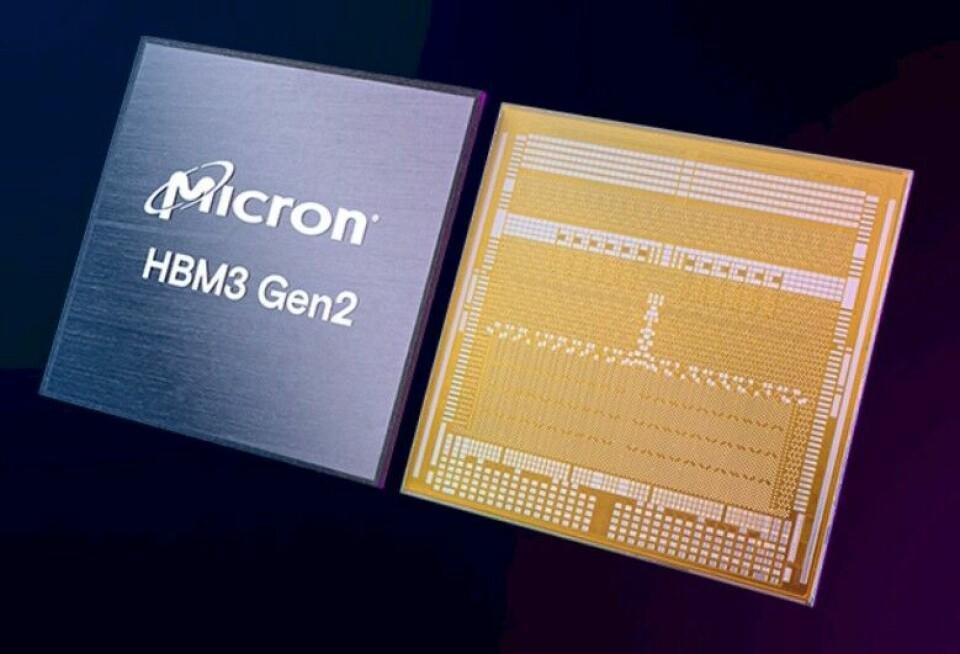
HBM is an advanced memory technology that uses vertically stacked memory dies and sophisticated packaging techniques to provide high data-transfer bandwidth in a relatively compact space.
It is particularly valuable for AI accelerators because these processors need to move large amounts of information between memory and computing units.
Why HBM Matters for AI Performance
Imagine a powerful processor as a factory capable of producing thousands of products every minute.
If the materials arrive too slowly, the factory cannot operate at full capacity. Increasing the speed at which materials arrive allows the factory to work more efficiently.
Memory performs a similar role in computing.
A processor may have enormous computing power, but it still needs data to work on. Fast memory helps reduce the time spent waiting for that data.
HBM can therefore play a significant role in improving the performance of AI accelerators, particularly when running large models or processing demanding workloads.
Why Memory Supply Is Becoming a Challenge
Producing HBM is more complicated than manufacturing conventional memory products.
The technology requires advanced memory dies, sophisticated stacking processes, careful thermal management, and complex packaging.
Demand from AI infrastructure providers has increased the importance of these capabilities.
Memory manufacturers are investing in production capacity and newer technologies to support the next generation of AI hardware. However, expanding manufacturing output is a gradual process.
This creates a potential bottleneck for the wider semiconductor industry.
Even when a processor design is ready, manufacturers may face challenges securing enough compatible memory and packaging capacity to produce complete systems.
For consumers, these pressures could eventually influence the prices and availability of certain electronic products, although the impact varies by component, manufacturer, and product category.
Advanced Chip Packaging Is Becoming a Major Industry Priority
The semiconductor industry is approaching a point where producing smaller transistors is no longer the only way to improve computing performance.
Advanced packaging allows manufacturers to combine multiple computing dies, memory components, and other elements into a single package.
This approach is particularly useful for AI processors, which often need large amounts of memory and high-speed connections between components.
Instead of relying on a single large piece of silicon to perform every task, manufacturers can integrate several specialised components into a more sophisticated system.
What Is a Silicon Interposer?
A silicon interposer is a component used in certain advanced semiconductor packages to connect processors and memory with very dense electrical interconnections.
It helps components communicate quickly, which is essential when an AI accelerator needs to exchange large amounts of data with nearby HBM.
However, these packages are becoming more complex as manufacturers increase the number of components they integrate.
The industry must continually improve manufacturing methods to support larger packages, tighter connections, and higher production volumes.
A Major Packaging Development in October 2026
On October 8, 2026, GlobalFoundries announced a $2 billion agreement to manufacture silicon interposers for Taiwan Semiconductor Manufacturing Company (TSMC) at its facility in New York.
The agreement highlights how important advanced packaging has become to the AI hardware supply chain.
It also demonstrates that the AI boom is creating opportunities beyond the companies that design the processors themselves.
Manufacturers that supply packaging components, testing services, specialised materials, and semiconductor equipment are becoming increasingly important to the industry.
As AI chips grow more sophisticated, these supporting technologies could play a greater role in determining how quickly new products reach the market.
TSMC Is at the Centre of the AI Chip Manufacturing Boom
Designing a semiconductor and manufacturing it are two different challenges.
Some technology companies design their own chips but rely on specialist manufacturers to produce them. These manufacturers operate highly advanced fabrication facilities, often called fabs.
Taiwan Semiconductor Manufacturing Company, commonly known as TSMC, is one of the most important companies in this part of the industry.
TSMC manufactures chips for customers across several technology markets, including high-performance computing and AI.
Its advanced manufacturing processes and packaging capabilities make it a key supplier for companies seeking to produce increasingly powerful processors.
Strong Revenue Highlights the Scale of Demand
TSMC reported September 2026 revenue of approximately NT$511.9 billion, an increase of 55% compared with September 2025.
Its reported third-quarter revenue reached approximately NT$1.49 trillion, up around 51% year over year.
These figures provide a useful indication of the scale of activity at one of the semiconductor industry’s most important manufacturers.
They should not be interpreted as proof that every part of the chip market is growing at the same rate. Semiconductor demand varies across product categories, and companies serving AI infrastructure may experience different conditions from those focused on consumer electronics.
Nevertheless, TSMC’s results underline the importance of advanced chip manufacturing to the current AI investment cycle.
Why Manufacturing Capacity Matters
Advanced semiconductor facilities require substantial investment in equipment, engineering, energy, water, and specialised materials.
Building a new fabrication plant and bringing it to high-volume production can take years.
This makes it difficult for manufacturers to respond immediately when demand rises sharply.
Packaging and testing capacity can also limit production, even when sufficient wafers are available.
For this reason, the industry’s ability to expand manufacturing capacity is likely to remain an important factor in determining how quickly new AI hardware can be delivered.
AI Chips Are Increasing Pressure on Energy and Cooling Systems
Another challenge is the amount of electricity required to operate modern AI infrastructure.
AI processors can consume substantial power, especially when deployed in large data-centre clusters. The servers also generate heat that must be removed to keep the equipment operating safely and reliably.
As companies install more powerful hardware, electricity supply and cooling infrastructure become increasingly important.
Why Cooling Matters
High-performance processors generate heat during operation.
If temperatures become too high, hardware may reduce its performance to protect itself. Poor thermal management can also affect reliability and increase maintenance requirements.
Traditional air cooling remains widely used, but some high-density computing systems also rely on liquid cooling.
Liquid cooling can remove heat more efficiently in certain demanding environments, although its suitability depends on the system design and operating conditions.
Data-centre operators must consider the entire computing environment rather than focusing exclusively on processor performance.
That includes:
- Electrical infrastructure and power availability.
- Cooling systems and heat removal.
- Networking equipment.
- Physical space and rack density.
- Hardware maintenance and replacement costs.
- Overall energy efficiency.
These factors influence the real-world cost of operating AI systems.
Efficiency Could Become a Competitive Advantage
A processor that delivers more useful computing performance per watt can help reduce electricity costs and cooling requirements.
This is one reason semiconductor companies are investing in more efficient architectures, advanced manufacturing processes, and specialised accelerators.
As AI services expand, customers are likely to pay increasing attention to the cost of running their models, not just how quickly those models can produce results.
Efficiency is therefore becoming an important part of the competition between hardware providers.
How the AI Chip Boom Could Affect Gaming PCs and Consumer Electronics
The AI semiconductor boom is not limited to data centres.
The same companies, manufacturing facilities, memory technologies, and equipment suppliers also support other areas of the electronics industry.
However, the effect on consumer products is not always straightforward.
Could Gaming Graphics Cards Become More Expensive?
Gaming GPUs and AI accelerators share parts of the broader semiconductor ecosystem, but they are not interchangeable products.
They can differ in architecture, memory configuration, software support, packaging, and intended workloads.
Strong demand for AI hardware may influence manufacturing investment, component availability, and competition for production capacity.
At the same time, gaming GPU prices are affected by several other factors, including product launches, retailer inventory, demand from gamers, manufacturing costs, and competition between brands.
It would therefore be misleading to assume that every increase in AI chip demand will automatically result in higher gaming graphics-card prices.
For PC builders, the practical approach is to compare current prices and performance rather than assuming that prices will move in one direction.
What About RAM and SSD Prices?
Memory and storage products also deserve attention.
AI data centres use large quantities of memory, and rising demand for particular memory technologies can influence how manufacturers allocate investment and production capacity.
However, HBM, conventional DDR memory, and NAND flash used in SSDs are different technologies.
Their prices do not necessarily rise or fall together.
Consumers planning a PC upgrade should monitor the prices of the specific components they need, including DDR5 RAM, SSDs, and graphics cards.
A shortage in one category does not automatically mean every component will become more expensive.
AI Is Also Coming to Everyday Computers
AI technology is increasingly appearing in consumer laptops and desktop computers.
Some devices can run smaller AI models locally, allowing certain tasks to be processed without sending every request to a cloud service.
Local AI can be useful for compatible applications involving image editing, transcription, summarisation, and software development.
However, the benefits depend on the computer’s processor, memory, software, and the specific AI workload.
More powerful AI hardware does not automatically improve every application or gaming experience.
For most consumers, the best purchase remains the device that suits their actual needs, budget, and expected workload.
The Semiconductor Supply Chain Faces New Challenges
The AI chip boom is creating opportunities, but it is also exposing weaknesses in the semiconductor supply chain.
Manufacturing an advanced processor requires far more than a chip designer and a fabrication plant.
The process depends on a global network of companies supplying semiconductor manufacturing equipment, chemicals, gases, silicon wafers, memory, packaging materials, and testing services.
A disruption affecting one critical component can delay production across several parts of the industry.
Advanced Packaging Capacity
As AI chips become larger and more complex, advanced packaging has emerged as an important production constraint.
Manufacturers need specialised facilities and processes to integrate computing dies with HBM and other components.
Expanding this capacity takes investment and technical expertise.
The October 2026 GlobalFoundries–TSMC agreement illustrates how companies are working across organisational and geographic boundaries to strengthen the supply chain.
Access to Advanced Manufacturing
Not every semiconductor company has the resources or expertise to manufacture chips using the most advanced processes.
Some firms design their processors and outsource production to specialist foundries.
This model allows companies to concentrate on chip design while relying on manufacturing partners to operate complex fabrication facilities.
However, it also means that several competing customers may depend on the same manufacturing resources.
When demand rises sharply, access to production capacity can become a competitive advantage.
Geopolitical and Trade Risks
Semiconductor manufacturing is also affected by international trade policies and restrictions on advanced computing technology.
Governments increasingly view semiconductors as strategically important because they support economic activity, national security, communications, and advanced industrial systems.
Changes in export controls, trade agreements, or industrial policy can influence where chips are produced and which customers can purchase particular products.
Companies must therefore consider geopolitical risk alongside technical and commercial decisions.
Building a resilient supply chain is becoming just as important as designing a powerful processor.
What Comes Next for AI Chips?
The semiconductor industry is likely to continue evolving as AI models and applications become more demanding.
Several developments are worth watching over the coming years.
1. More Powerful AI Accelerators
Chipmakers will continue developing processors designed to train and run increasingly sophisticated AI models.
Improvements may include greater computing performance, higher memory bandwidth, better interconnects, and more efficient power consumption.
The challenge will be delivering these improvements without allowing system costs to rise faster than the value customers receive.
2. Greater Use of Custom Silicon
Large technology companies may continue designing their own AI processors for specific workloads.
Custom chips can help organisations optimise performance and costs for their own infrastructure.
However, developing them requires considerable engineering resources, and custom hardware does not automatically outperform a general-purpose GPU in every application.
3. Continued Investment in HBM
High-bandwidth memory is likely to remain an important part of advanced AI systems.
Future generations of HBM aim to improve capacity, bandwidth, and efficiency.
The success of these technologies will depend on manufacturing yields, packaging capabilities, thermal management, and the ability to scale production.
4. Advances in Chip Packaging
Advanced packaging techniques will continue to influence how processors and memory are combined.
Chiplets, high-density interconnections, and increasingly sophisticated integration methods offer manufacturers additional ways to improve system performance.
These technologies may become particularly important as designers encounter physical and manufacturing limits when trying to build larger individual chips.
5. Greater Attention to Energy Efficiency
The cost of electricity and cooling will remain important as AI infrastructure expands.
Hardware developers will need to improve performance per watt while supporting the demands of larger AI workloads.
Customers will also need better ways to measure the total cost of operating their systems.
The most competitive products will not necessarily be those with the highest theoretical performance. Efficiency, reliability, software support, and overall system cost will also matter.
Is the AI Chip Boom Sustainable?
The rapid expansion of AI infrastructure raises an important question: how long can the semiconductor industry maintain its current pace of growth?
There are reasons for optimism.
AI is being adopted across a growing range of applications, including software development, scientific research, customer support, business automation, and content creation.
As companies discover practical uses for AI, demand for computing infrastructure may continue to increase.
However, investment on this scale also carries risks.
Building data centres and purchasing advanced processors require substantial capital. Companies must eventually generate enough revenue or measurable business value to justify those expenses.
If demand grows more slowly than expected, some organisations could find themselves with excess capacity or hardware that is expensive to operate.
Rapid advances in chip design could also change which products offer the best value, potentially affecting the economics of existing infrastructure.
For semiconductor manufacturers, the challenge is balancing investment with realistic expectations about future demand.
The long-term outlook will depend not only on how quickly AI technology advances but also on how widely useful AI services are adopted and whether businesses can make them economically sustainable.
Final Verdict: AI Is Reshaping the Semiconductor Industry
Artificial intelligence has become one of the semiconductor industry’s most important growth drivers in 2026.
Demand for GPUs, specialised AI accelerators, high-bandwidth memory, and advanced packaging is changing how companies design, manufacture, and deliver computing hardware.
NVIDIA and AMD are competing to provide powerful processors, while companies such as TSMC and GlobalFoundries are helping address the manufacturing and packaging challenges that come with increasingly complex chip designs.
Memory suppliers, equipment manufacturers, and other semiconductor businesses are also benefiting from the industry’s growing need for advanced computing infrastructure.
Yet the expansion brings challenges. Production capacity, energy consumption, cooling requirements, supply-chain constraints, and the cost of developing new technologies will all influence how quickly the industry can grow.
For consumers, the effects may appear in the prices and availability of certain computer components and the increasing presence of AI features in everyday devices. For businesses, the bigger question is whether the performance gains from new hardware can justify the investment.
One thing is clear: the future of artificial intelligence will depend on more than software alone. The processors, memory systems, and manufacturing technologies behind it will play a central role in determining what AI can accomplish next.